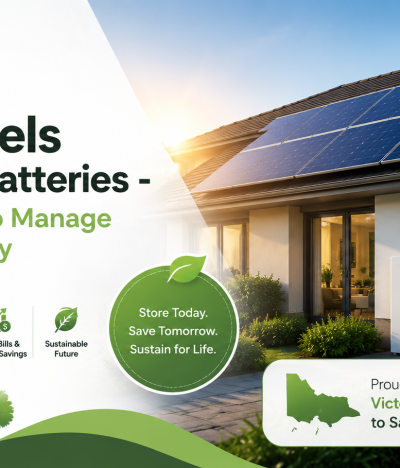


Rising power prices have made energy-efficient home upgrades one of the most searched topics among Victorian homeowners. The right combination of upgrades can reduce how much energy your home uses and how much you pay for it, whether you’re starting with one change or planning a full home energy overhaul.
This guide walks through seven practical, well-established upgrades, how they work, and how to think about which ones make sense for your home first.
Key Takeaways
- Energy-efficient home upgrades work best when they target your home’s biggest energy costs first, such as hot water, heating and cooling.
- Heat pump hot water systems can significantly cut one of the largest single energy loads in an average household.
- Solar panels Victoria households install let you generate your own electricity and offset daytime grid usage.
- Home battery storage extends solar savings into the evening, when most households use the most power.
- Energy-efficient air conditioning, such as Midea and Rinnai systems, reduces the cost of year-round heating and cooling.
- Smart controls, LED lighting and better insulation are lower-cost upgrades that compound the savings from bigger investments.
- The best results usually come from combining several upgrades rather than relying on just one.
Why Energy Efficiency Matters More Than Ever
Electricity prices have risen steadily across Victoria in recent years, and household energy use remains one of the largest ongoing costs of owning a home. Heating, cooling and hot water alone typically account for a large share of a household’s total energy bill.
Energy-efficient home upgrades address this at the source. Instead of simply using less power and sacrificing comfort, the right upgrades let your home use energy more efficiently, so you get the same comfort and functionality for less cost.
Upgrade #1 — Heat Pump Hot Water Systems
Hot water is one of the biggest energy users in an average Victorian home. Traditional electric or gas hot water systems heat water continuously or on a set schedule, regardless of how efficiently they’re doing it.
Heat pump hot water systems work differently. Rather than generating heat directly, they extract heat from the surrounding air and use it to warm your water, using significantly less energy in the process. For households looking to reduce one of their largest single energy costs, this is often one of the highest-impact upgrades available.
Upgrade #2 — Solar Panels
Solar panels Victoria homeowners install convert sunlight into electricity, letting your home generate its own power during daylight hours instead of buying it from the grid.
A well-sized solar system can offset a large share of daytime electricity use, covering everything from appliances to air conditioning while the sun is up. For most Victorian households, solar remains one of the most reliable ways to reduce ongoing electricity costs.
Upgrade #3 — Home Battery Storage
Solar panels only generate power while the sun is shining, but most households use the most electricity in the early morning and evening. Home battery storage bridges that gap by storing surplus solar energy generated during the day for use after dark.
Instead of exporting unused solar power to the grid for a low return and then buying expensive grid electricity a few hours later, a battery lets your household use more of the power it already generates, extending your solar savings into the evening.
Upgrade #4 — Energy-Efficient Air Conditioning
Heating and cooling account for a significant portion of household energy use, particularly across Victoria’s cold winters and warm summers. Older or poorly sized air conditioning systems often work harder than necessary, using more energy to deliver the same comfort.
Energy-efficient air conditioning systems, such as those from Midea Air Conditioning and Rinnai Air Conditioning, are designed to deliver consistent heating and cooling while using less energy per cycle. Midea systems are known for efficient inverter technology that adjusts output to match demand, rather than cycling on and off at full power. Rinnai systems are widely used in Australian homes for their reliable performance across both heating and cooling seasons. Choosing the right system size and efficiency rating for your home is one of the most effective ways to reduce year-round energy costs.
Upgrade #5 — Smart Home Energy Controls
Smart thermostats, timers and energy monitoring systems help households understand exactly where their energy is going and adjust usage accordingly. Rather than heating or cooling an empty house, or running appliances at peak pricing times, smart controls let you automate your home’s energy use around your actual routine.
On their own, smart controls typically deliver moderate savings. Paired with solar, battery storage or efficient appliances, they help ensure those bigger investments are being used as efficiently as possible.
Upgrade #6 — LED Lighting
LED lighting is one of the simplest and most affordable energy-efficient home upgrades available. LED bulbs use a fraction of the energy of traditional incandescent or halogen lighting while lasting considerably longer.
The saving from any single LED bulb is small, but across a whole household running multiple light fittings every day, the cumulative effect adds up meaningfully over a year, with minimal upfront cost.
Upgrade #7 — Better Insulation
Insulation is easy to overlook because it’s not a visible appliance, but it directly affects how hard your heating and cooling systems need to work. A well-insulated home retains warmth in winter and stays cooler in summer, reducing the energy needed to maintain a comfortable temperature.
Improving ceiling, wall or underfloor insulation is often one of the most cost-effective upgrades available, since it reduces demand on every heating and cooling system in the home, not just one appliance.
Which Upgrade Delivers the Best Return on Investment?
There’s no single upgrade that delivers the best return for every household — it depends on your current setup, energy usage patterns and which costs are highest on your bills. The table below offers a general comparison to help guide where to start.
| Upgrade | Upfront Cost | Potential Savings | Energy Efficiency Impact |
| Heat Pump Hot Water | Moderate | High — hot water is a major daily energy draw | High |
| Solar Panels | Moderate to high | High — offsets daytime grid electricity use | High |
| Home Battery Storage | High | Moderate to high — depends on evening usage | High |
| Efficient Air Conditioning | Moderate | Moderate — reduces heating and cooling costs | Moderate to high |
| Smart Home Energy Controls | Low to moderate | Moderate — improves how efficiently other systems run | Moderate |
| LED Lighting | Low | Low to moderate — small but consistent daily saving | Moderate |
| Better Insulation | Moderate | Moderate to high — reduces heating and cooling demand year-round | High |
As a general pattern, upgrades that target your largest existing energy costs, such as hot water, heating and cooling, tend to deliver the strongest returns. Lower-cost upgrades like LED lighting and smart controls won’t transform a power bill on their own, but they add meaningful, low-risk savings alongside bigger investments.
Planning Energy-Efficient Home Upgrades with Time To Green
Every home has a different starting point, whether that’s an ageing hot water system, an underinsulated roof, or no solar at all. Time To Green works with Victorian homeowners to look at where energy and money are actually being spent, and helps plan which upgrades make the most sense to prioritise first, whether that’s a single appliance replacement or a broader combination of solar, battery and efficiency improvements.
Frequently Asked Questions
1. What are the best energy-efficient home upgrades for Victorian households?
For most Victorian households, the highest-impact upgrades are heat pump hot water systems, solar panels and efficient air conditioning, since heating, cooling and hot water typically make up the largest share of household energy costs. Home battery storage, insulation, smart controls and LED lighting then add further savings on top.
1. How much do energy-efficient home upgrades typically cost?
Costs vary widely depending on the upgrade, from relatively low-cost changes like LED lighting through to larger investments like solar and battery storage. The right starting point depends on your budget and which upgrades will have the biggest impact on your current bills.
2. Should I upgrade my hot water system or install solar first?
It depends on your household. If hot water is your largest energy cost, a heat pump system may deliver the fastest noticeable saving. If your overall electricity use is high across the day, solar may offer a broader benefit. Many households eventually do both.
3. Is home battery storage worth it without solar panels?
A home battery delivers the most value when paired with solar, since it stores your own generated electricity for later use. Without solar, a battery has less surplus energy to draw from, so most households install solar first or at the same time.
4. How do I know which upgrades are right for my home?
The right combination depends on your current appliances, energy usage patterns, roof suitability and budget. Reviewing your recent energy bills alongside a professional assessment is the most reliable way to identify where the biggest savings opportunities are.
Making Energy-Efficient Home Upgrades That Actually Pay Off
From heat pump hot water systems and solar panels through to efficient air conditioning, insulation and smart controls, energy-efficient home upgrades give Victorian households a practical way to lower electricity bills and improve everyday comfort. The right combination depends on your home, your current energy use and your budget, but even one or two well-chosen upgrades can make a meaningful difference over time.
Interested in making your home more energy efficient? Contact Time To Green to explore suitable solutions that can help reduce energy consumption and support long-term savings.